December 2nd, 2008 — Hip-Hop, Radio
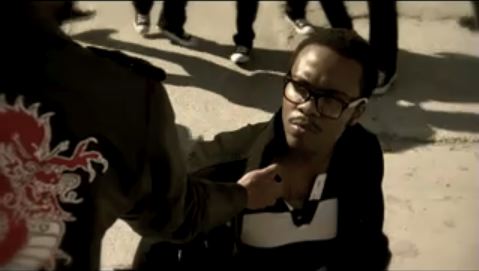
Last week, Farai Chideya, of NPR’s “News & Notes” had on New Orleans native Alvin “Rah Almillio” Lindsey, above, who, with his brother, Kintrell “Krispy Kream” Lindsey, form the hip-hop duo, The Knux. Joining him were Noah Callahan-Bever, editor-in-chief of Complex magazine, and, yours truly.
We were there to discuss a burgeoning style of hip-hop some would say the Knux typify, and that many call “hipster rap,” mostly due to:
Continue reading →
TrackbackPermalink December 1st, 2008 — Food, Science

Tousle-headed Timmy is about to discover one of the worst taste combinations known to humanity: Fresh toothpaste-mouth washed down by orange juice.
Bleccchh. We’ve all accidentally combined the two. But why is it so awful?
Continue reading →
TrackbackPermalink December 1st, 2008 — Architecture, Obituary

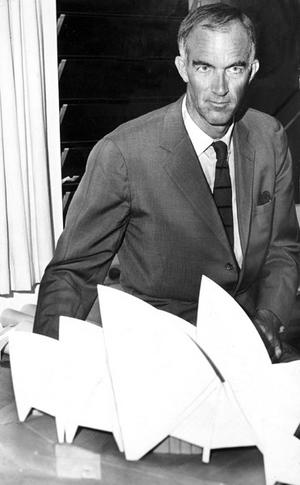 By creating the Sydney Opera House, above, Danish architect Jørn Utzon, right, who died in his sleep of a heart attack over the weekend, at age 90, did more than make a great and transcendent building. He accomplished that rarest of architectural feats: He created a symbol that, as the U.S. Capitol does for this country, or the Eiffel Tower does for France, became part of a nation’s identity.
Or, as I like to put it, he made a building that, were you to wake up out of a long sleep and see it, would tell you exactly where in the world you were. Trust me: It’s harder than you might think.
The great irony, though, is that he never saw it finished. Wrote The New York Times,
When only the shell of the opera house was complete, the architect found himself at odds with Davis Hughes, the New South Wales minister for public works, over cost overruns and delays. When Mr. Hughes stopped payments to Mr. Utzon in 1966, the architect packed up his family and left the country.
Continue reading →
TrackbackPermalink December 1st, 2008 — Africa, Animals
I absolutely have no patience for white people who try befriending dangerous, wild animals, not only because the animals never get to negotiate these arrangements—except with claws—but more because I view such efforts as seated squarely on the continuum of white arrogance.
However, in this clip, these two men attempt to re-introduce themselves to a male lion, in the wild, that they’d befriended earlier, after he had acquired his own pride and mate. Take a look at what happens.
TrackbackPermalink November 28th, 2008 — Culture, Language, NONFICTION

T‘aarof, rendered above in Arabic script, is, according to Wikipedia,
a Persian form of civility emphasizing both self-deference and social rank. The term encompasses a range of social behaviours, from a man displaying etiquette by opening the door for a woman, to a group of colleagues standing on ceremony in front of a door that can permit the entry of only one at time, earnestly imploring the most senior to break the deadlock.
I cite Wikipedia as a source, here—I rarely do this on MEDIA ASSASSIN—because that’s where I discovered this aspect of Middle Eastern culture. (Big up, Wiki: Probably no internet source links more disparate topics than this online medium.)
Reading on,
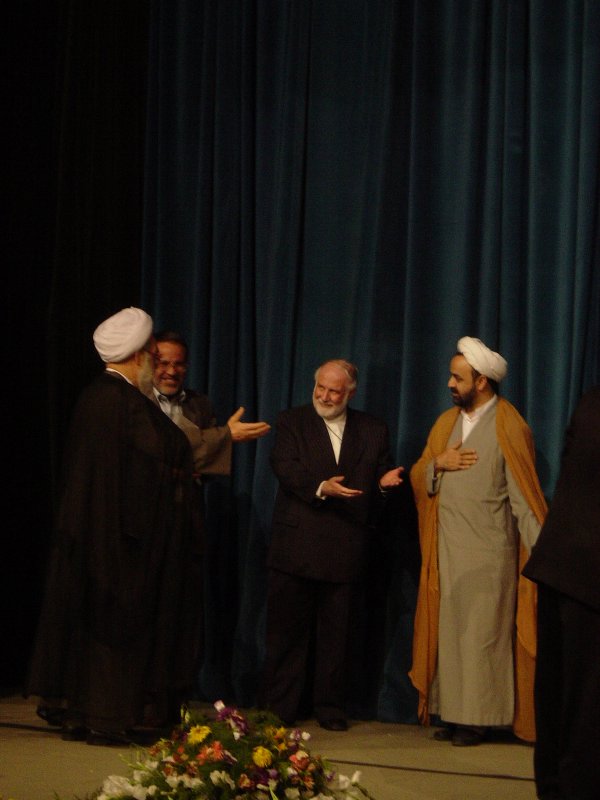 The prevalence of t’aarof often gives rise to different styles of negotiation than one would see in a European or North American culture. For example, a worker negotiating a salary might begin with a eulogy of the employer, followed by a lengthy bargaining session consisting entirely of indirect, polite language — both parties are expected to understand the implied topic of discussion. It is quite common for an Iranian worker (even one employed in an Iranian neighborhood within Europe) to work unpaid for a week or two before the issue of wages is finally broached. Likewise, a shopkeeper may initially refuse to quote a price for an item, suggesting that it is worthless (“gh’aabel nadaareh”). T’aarof obliges the customer to insist on paying, possibly several times, before a shopkeeper finally quotes a price and real negotiation can begin.
I was stupefied that I’d never heard of this social practice, one whose structure was so elaborate, and whose presence was so intrinsic to Iranian reality, as seen above. I reached out Dr. Michael C. Hillman, a professor of Middle Eastern languages and cultures at the University of Texas at Austin, and author of the book, Iranian Culture: A Persianist View, in order to help me understand this cultural quality. Michael Hillman is a guest, today, on this repeat broadcast of my WBAI-NY / 99.5 FM radio show, NONFICTION, this afternoon, Friday, November 28, at 2 pm ET.
Then, Isaac Dolom, of the late, great, much-lamented Dailysonic podcast—they ceased production in November 2006—takes a trippy look into the microscopic makeup of ordinary sounds. For example, what would a human heartbeat sound like if sped up a thousand times? (Something like a machine, it turns out.) Not to be missed, never to be forgotten.
You can hear their ideas by tuning in at 2 pm. If you’re outside of the New York tri-state, you can check out our stream on the web. If you miss the live show, dig up our archive for up to 90 days after broadcast.
TrackbackPermalink November 27th, 2008 — Politics, Race
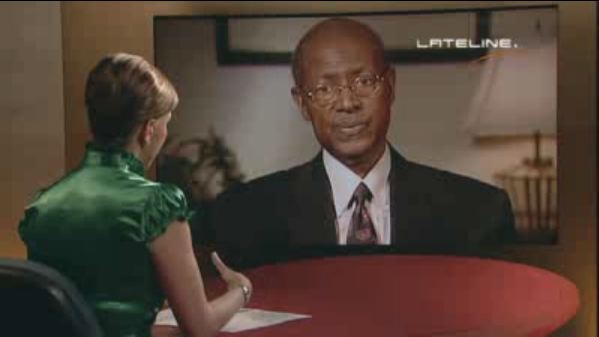
Thanks to the wayward nation of Australia for doing what no U.S. media, in their white, self-congratulatory, post-election euphoria, have yet done, save C-SPAN and Bill Moyers Journal: In this clip from the Aussie news show, Lateline, Dr. Ron Walters, director of the University of Maryland’s African American Leadership Center, and a key strategist with both of Jesse Jackson’s presidential campaigns, talks at length about the role of race in the Obama campaign, and specifically on the president-elect’s “race-neutral” modus operandi.
Continue reading →
TrackbackPermalink November 25th, 2008 — Film, Science-Fiction
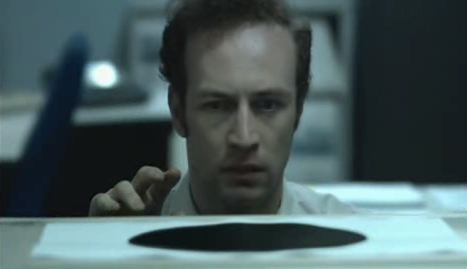
Grand Prize winner in Virgin Media Shorts‘ 2008 competition, The Black Hole was directed by West Londoners Phil Sampson and Olly Williams of Diamond Dogs. A perfectly crafted brief, it tells the story of a bleary-eyed night office worker (Napoleon Ryan), above, who discovers a portal—a shortcut through matter—that gives him an awesome new power…until he starts to abuse it. Let this be a lesson to you, viewers.
TrackbackPermalink November 25th, 2008 — Technology
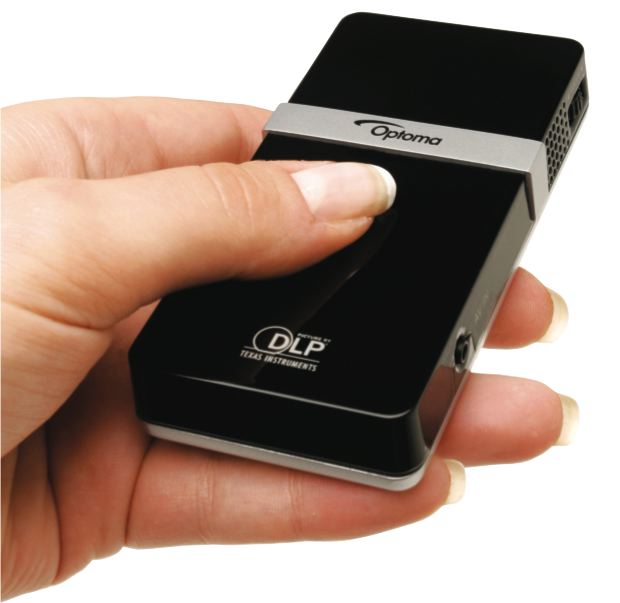
Listing for about $430, Optoma USA’s PK-101 PICO Pocket Projector puts the power of DLP projection inside a 4 oz., 4″ x 2″ box. Or, as they say,
Smaller than most smart phones, this new micro-portable projector fits in your palm and is the ideal companion to ultra-portable media devices such as iPods®, PDA’s, smart phones and digital cameras.
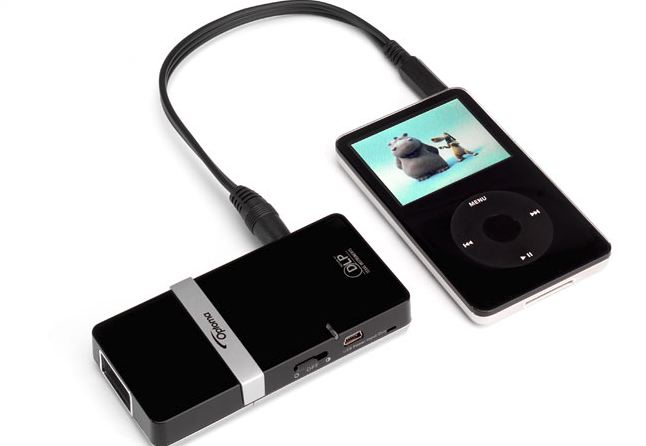 When connected to an ultra-mobile device, the four-ounce Optoma Pico Projector allows users to share photos and videos, and enjoy a far better visual experience with an image that is up to 100 times larger than the small screen of the source device.
Continue reading →
TrackbackPermalink November 24th, 2008 — Photography, Technology
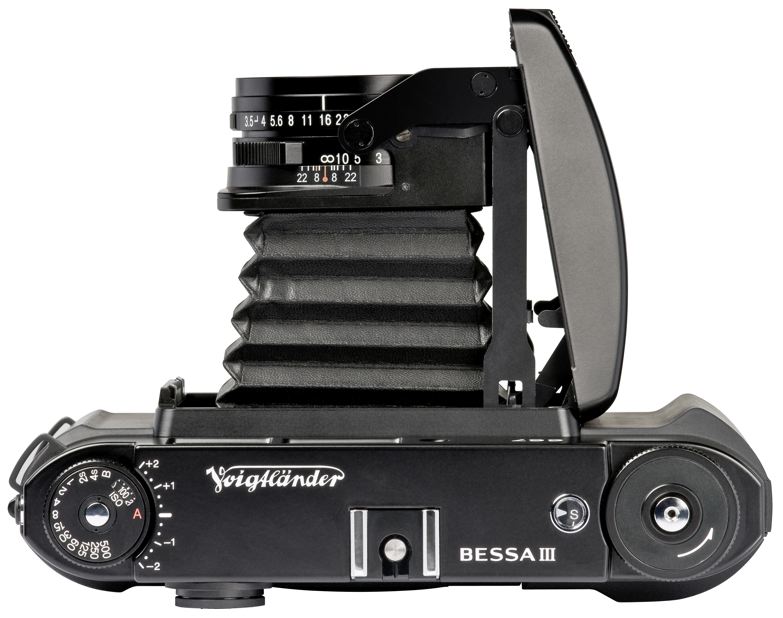
Started in 1756 as an optics manufacturer, the German company Voigtländer didn’t even make its first metal camera until nearly a huindred years later, in 1849. Their devices quickly acquired a global reputation for astoundingly sharp images, though, courtesy of the firm’s revolutionary Petzval lenses.
Over the decades, Voigtländer created a number of technically innovative products, like their 1965 Vitrona, the first 35mm compact camera with a built-in electronic flash. The post-World War II mega-dominance of the photography biz by Japanese camera manufacturers, however, ultimately led to their demise and to Cosina’s 1999 acquisition of the Voigtländer name.
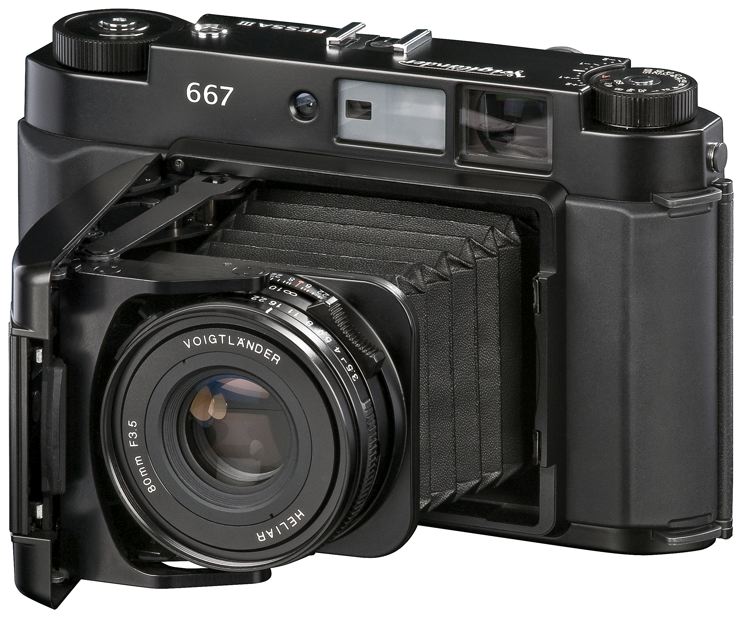
In the nearly ten years since, though, Cosina’s produced several solid-body, Leica screw mount film cameras under Voigtländer’s famed marque. Now, it looks like they’re truly feeling their royal oats, having recently announced the upcoming 2009 release of the Voigtländer Bessa III, above and right.
Continue reading →
TrackbackPermalink November 24th, 2008 — DVD, Music, Music Video
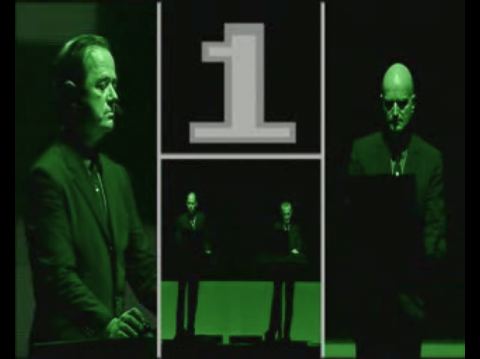
Reclusive wunderkinds Kraftwerk (“power plant,” in German) have been making ill, steely beats since 1970, when Ralf Hütter and Florian Schneider, above, founded the concept group in Düsseldorf. (They’d met as students in the conservatory there, during the late ’60s.)
Continue reading →
TrackbackPermalink


